
BPC-157
BPC-157 is a synthetic peptide composed of a defined amino acid sequence produced through controlled peptide synthesis. It is structurally characterized and utilized in laboratory research settings for analytical and experimental evaluation under controlled conditions. The compound is supplied in lyophilized powder form to support stability and integrity during storage and handling in research environments.
Free Shipping on All Orders $175+
Product Usage: Not for Human or Veterinary UsePure Health Peptides products are supplied to qualified research professionals and institutional users for in vitro laboratory research only. KYC verification is required prior to order fulfillment, and we reserve the right to refuse orders that do not meet buyer qualification criteria. These products are not drugs, foods, cosmetics, diagnostic products, or dietary supplements, have not been evaluated by the FDA, and are not intended for human or animal use. Any such use is prohibited and may violate federal, state, or local law. By purchasing, the buyer represents and warrants that the product will be used solely for in vitro research. The buyer agrees to indemnify, defend, and hold harmless Pure Health Peptides, its officers, employees, and agents from and against any and all claims, damages, losses, liabilities, costs, and expenses (including reasonable attorneys fees) arising out of or relating to the buyer’s use, handling, storage, or disposition of the product in any manner inconsistent with its research-use-only designation or applicable law.
Description
Product Name:
BPC-157
Chemical Information:
- Molecular Formula: C62H98N16O22
- Molecular Weight: 1419.54 g/mol
- Sequence: Gly-Glu-Pro-Pro-Pro-Gly-Lys-Pro-Ala-Asp-Asp-Ala-Gly-Leu-Val
- Molecular Structure

Product Description:
BPC-157 is a synthetic peptide composed of a defined amino acid sequence produced through controlled peptide synthesis. It is structurally characterized and utilized in laboratory research settings for analytical and experimental evaluation under controlled conditions. The compound is supplied in lyophilized powder form to support stability and integrity during storage and handling in research environments.
Research Applications:
BPC-157 is utilized in controlled laboratory research settings for applications such as:
- Analytical evaluation of peptide structure and sequence characteristics
- Examination of peptide stability and degradation profiles under defined conditions
- Investigation of peptide behavior in biochemical and cell-based assay systems
- Characterization of peptide interactions within controlled experimental models
Storage and Handling:
- Store the lyophilized powder at -20°C.
- Once reconstituted, store at 2-8°C and use promptly.
- Maintain aseptic handling practices to ensure product quality and sterility.
Product Specifications:
- Purity: ≥99% (HPLC Certified)
- Appearance: Lyophilized white powder
- Solubility: Soluble in suitable laboratory agents
Compliance Notice:
BPC-157 is FOR RESEARCH USE ONLY. It is not intended for human or veterinary use. This product has not been evaluated by the FDA. Misuse of this product is strictly prohibited and may violate federal, state, or local laws. By purchasing this product, buyer represents and warrants that it will be used only for in vitro research purposes.
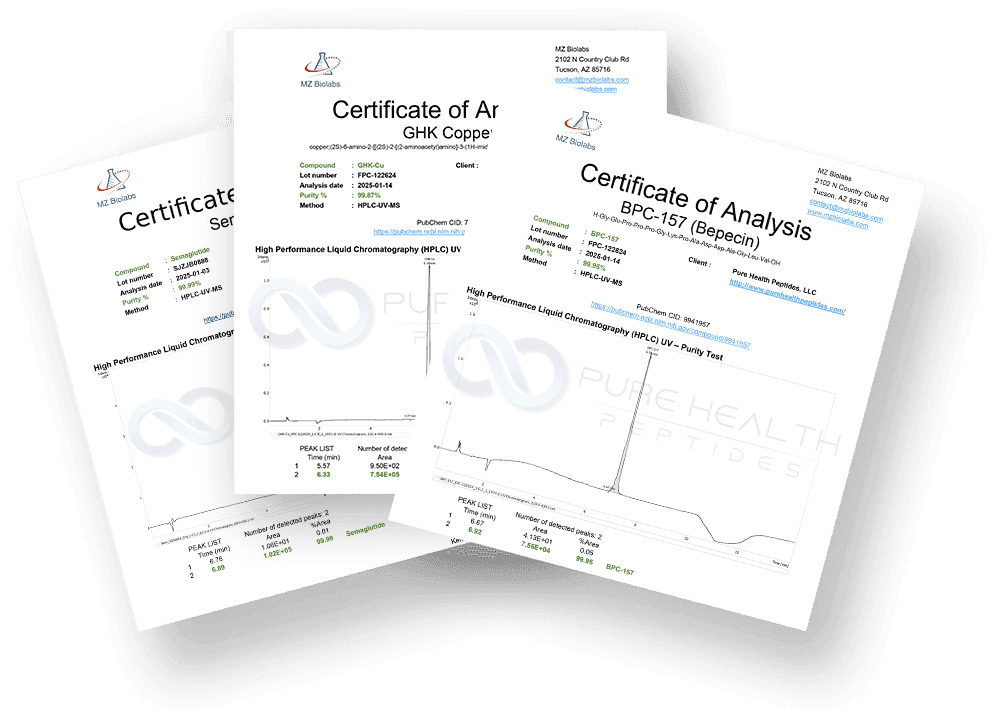
Certificate of Analysis
At Pure Health Peptides, transparency is key. Every batch is third-party tested in the USA, with Certificates of Analysis (COAs) readily available for verification, giving researchers confidence in their work.
View Certifications


